CONTANDO A HISTÓRIA DO MAIOR CARNAVAL DO MUNDO
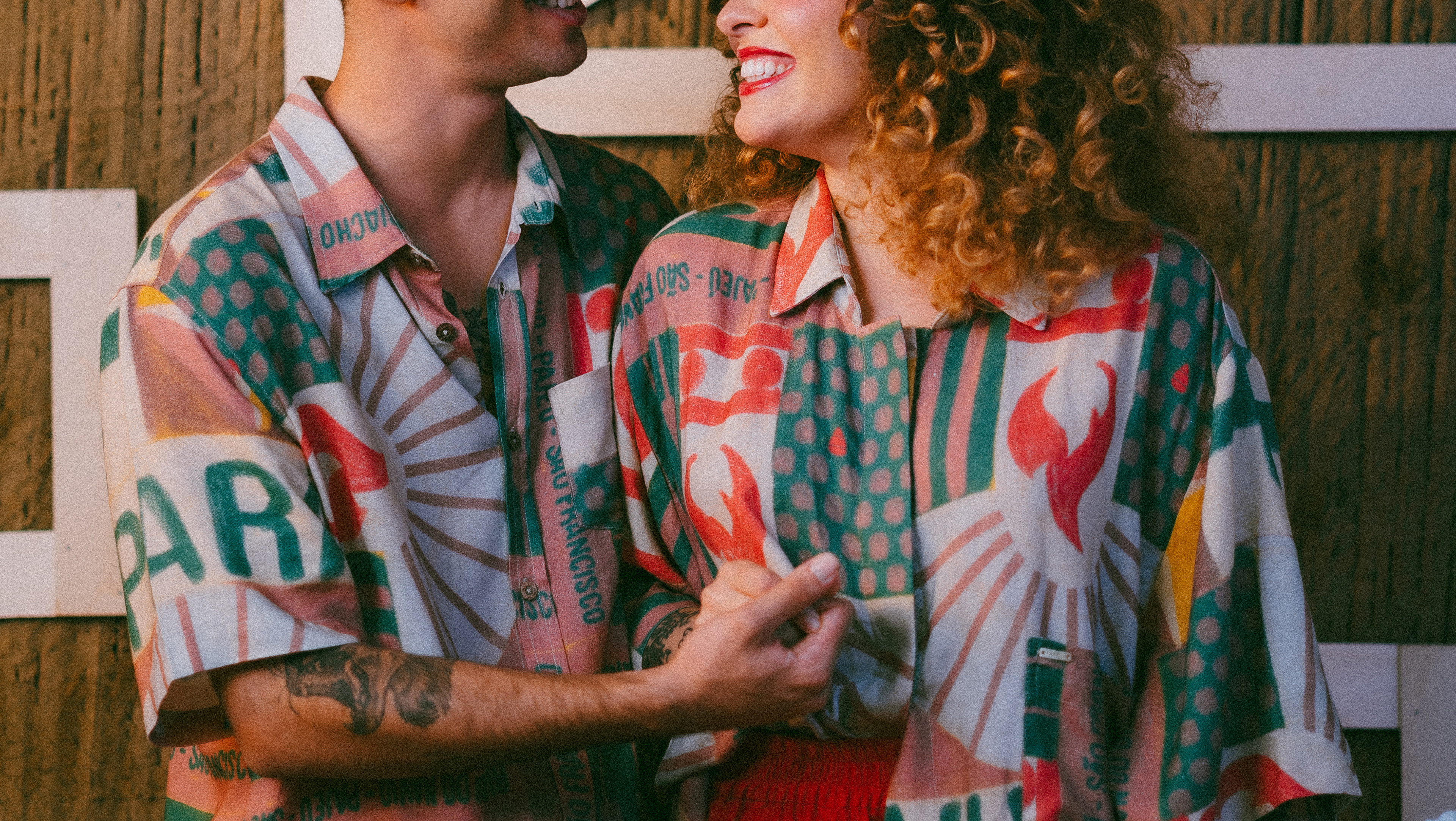
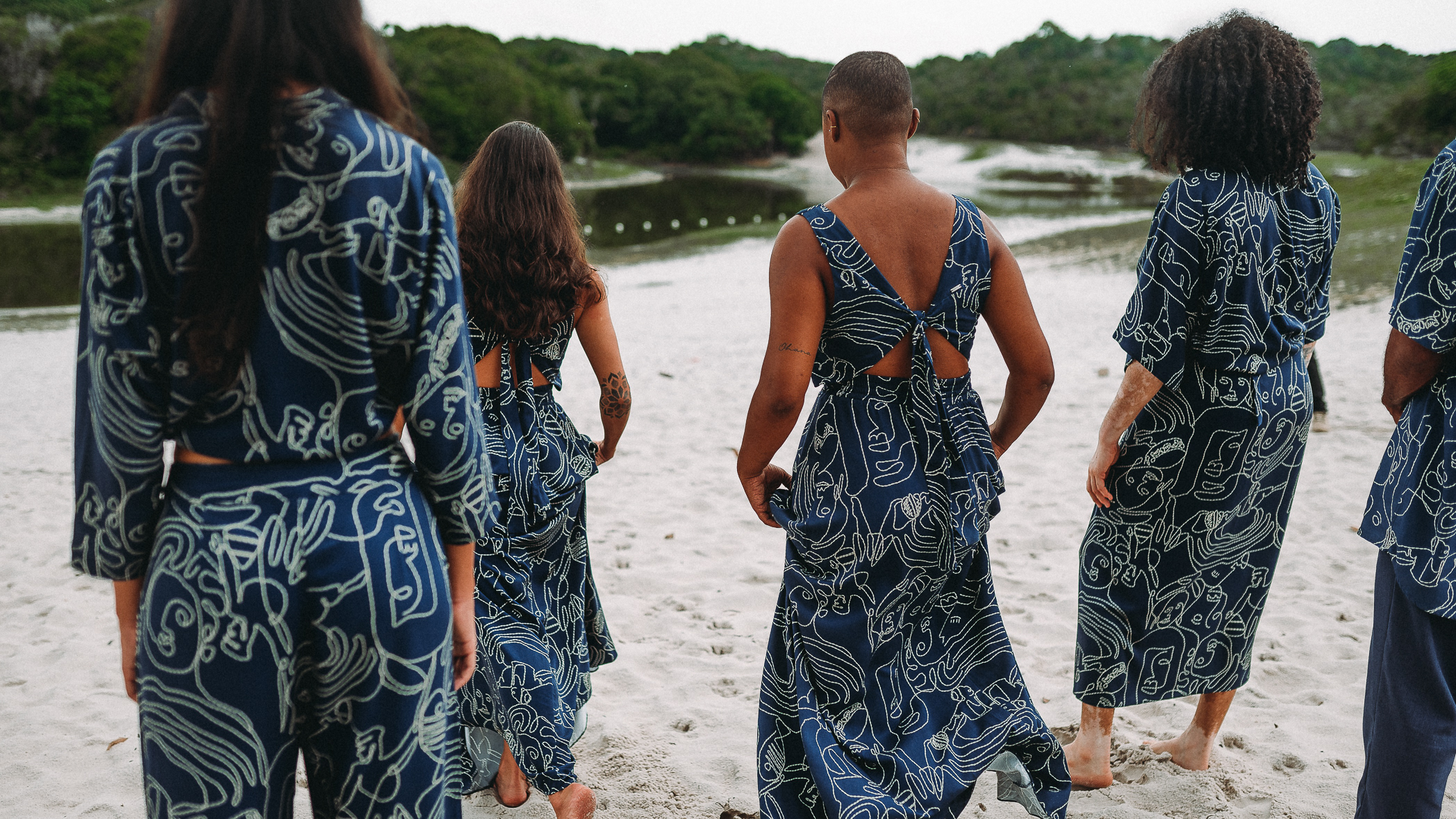
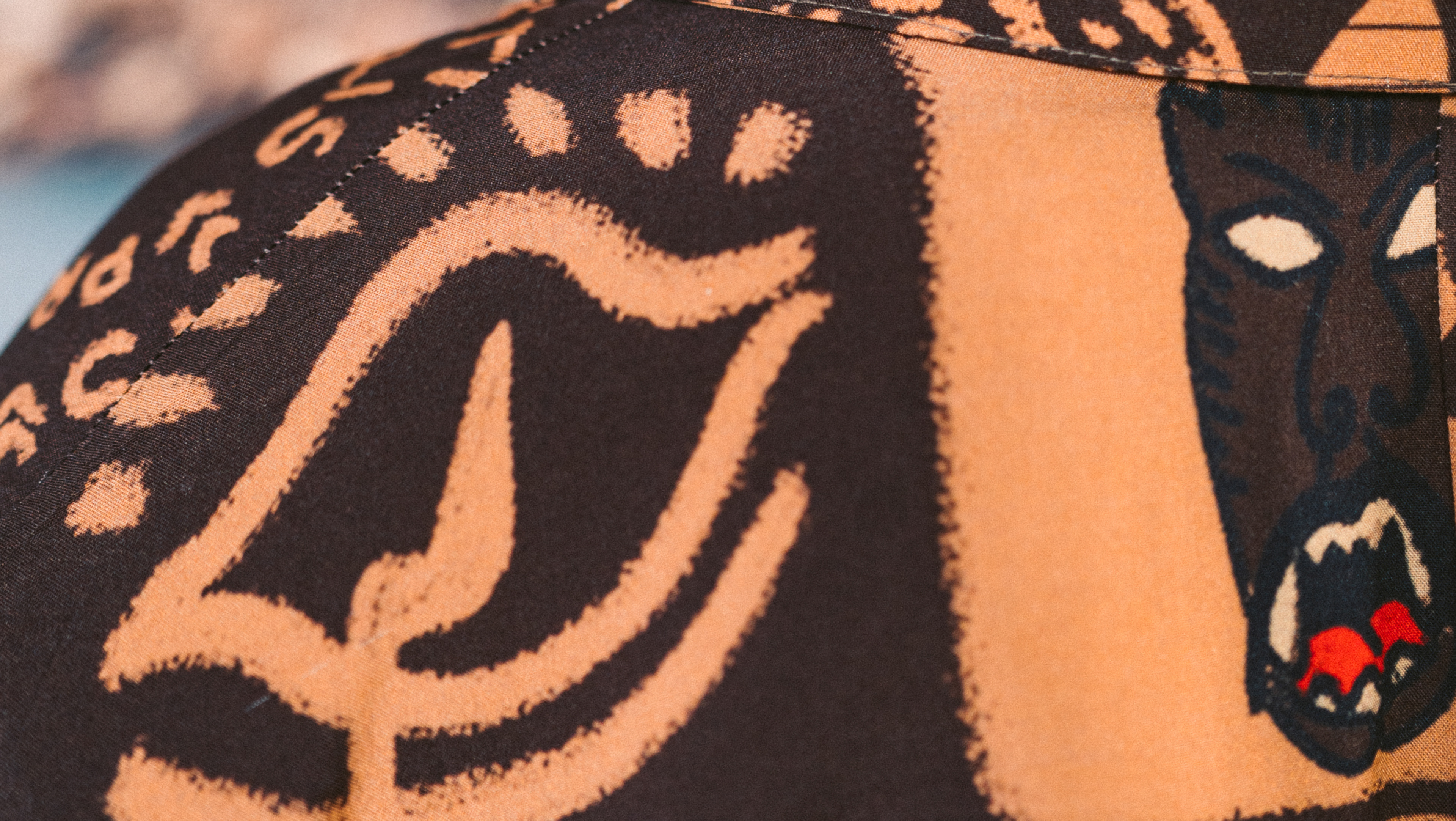
A missão em 2024 foi contar a história do carnaval de Salvador nas estampas. Pra isso, foi preciso estudar como tudo começou e escolher elementos que identificassem isso. Escolhi o caminho de dividir por etapas, contando a transformação que o carnaval sofreu até chegar nos dias atuais.
TELLING THE STORY OF THE WORLD'S BIGGEST CARNIVAL
The mission in 2024 was to tell the story of Salvador's carnival through prints. To do this, it was necessary to study how it all began and choose elements that identified it. I chose the path of dividing it into stages, recounting the transformation that the carnival underwent until reaching the present day.
PRIMEIRA PARADA
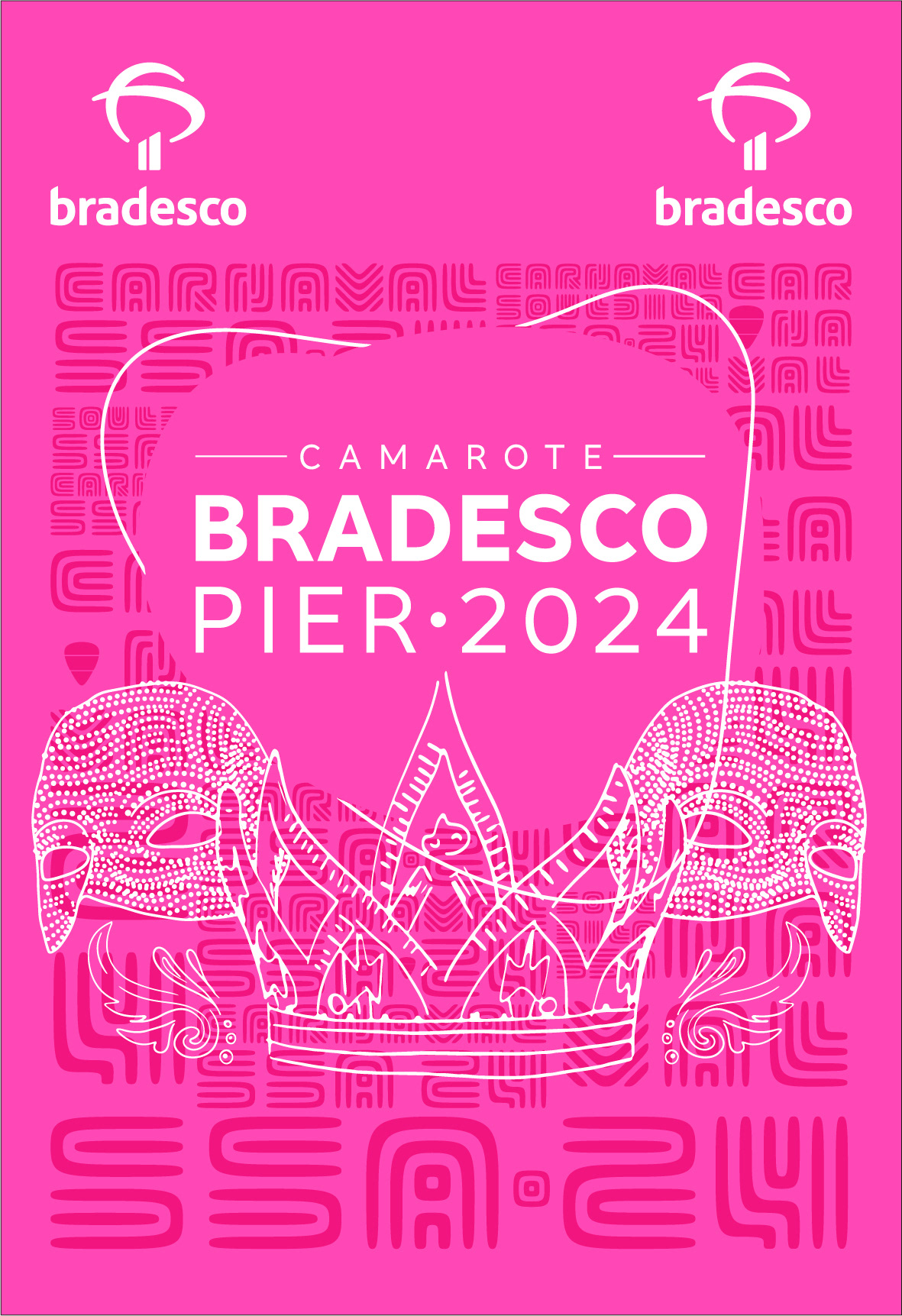
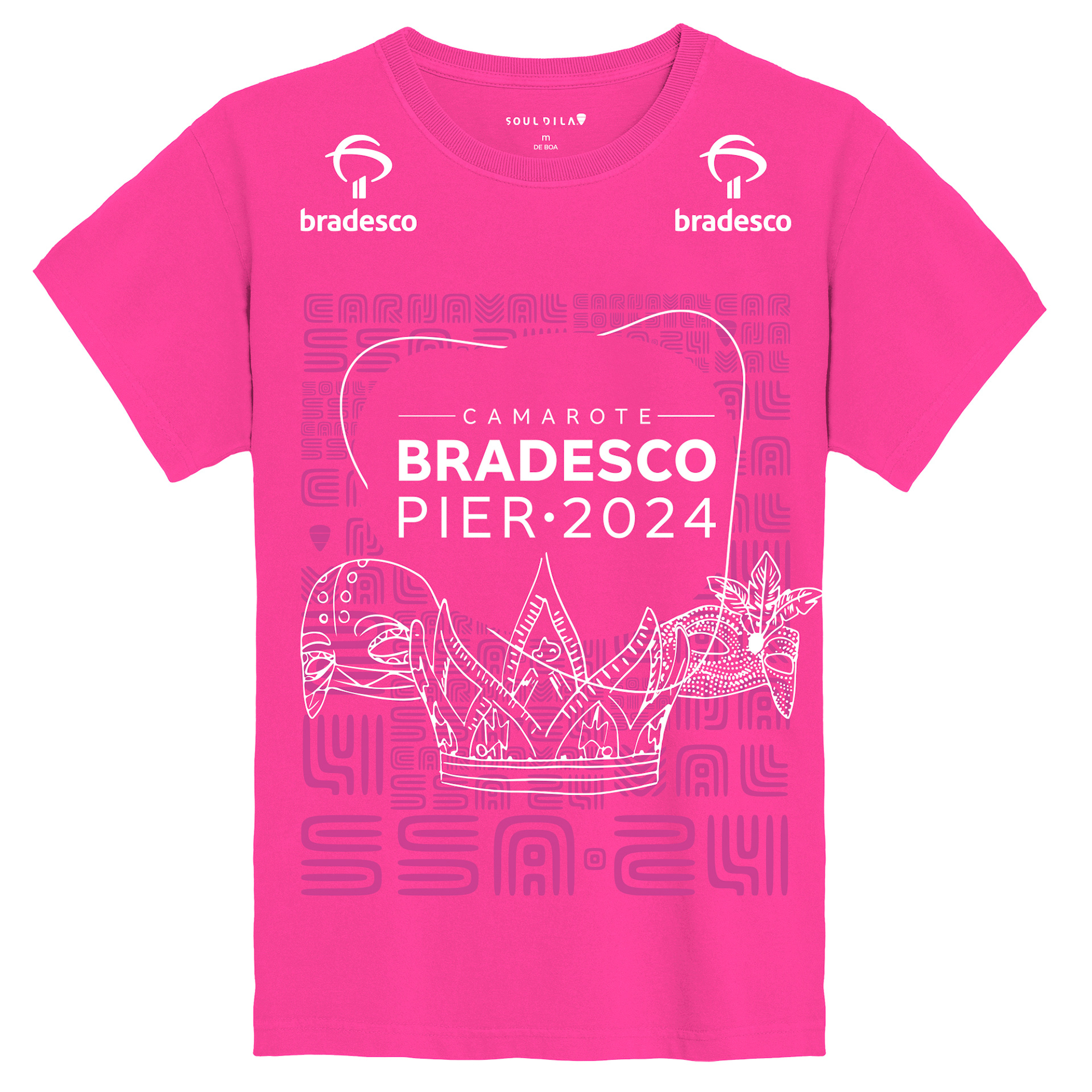
A estampa inaugural da coleção de Carnaval 2024 resgata a gênese da folia em Salvador, transportando para o tecido a atmosfera lúdica e subversiva dos luxuosos bailes de máscara do século XIX. Inspirada no momento histórico em que a festa começou a ganhar contornos de espetáculo antes de tomar definitivamente as ruas, a arte traduz o mistério e o anonimato das fantasias através de elementos teatrais e traços expressivos. Mais do que um adorno, a máscara no design é representada como um instrumento de libertação e transgressão social, marcando o início da maior festa popular do planeta.
FIRST STOP
The inaugural print of the 2024 Carnival collection rescues the genesis of revelry in Salvador, bringing the playful and subversive atmosphere of the luxurious 19th-century masquerade balls to the fabric. Inspired by the historical moment when the festivities began to take on the contours of a spectacle before definitively taking over the streets, the artwork translates the mystery and anonymity of the costumes through theatrical elements and expressive strokes. More than an adornment, the mask in the design is represented as an instrument of liberation and social transgression, marking the beginning of the biggest popular party on the planet.
CARNAVAL NO PELOURINHO
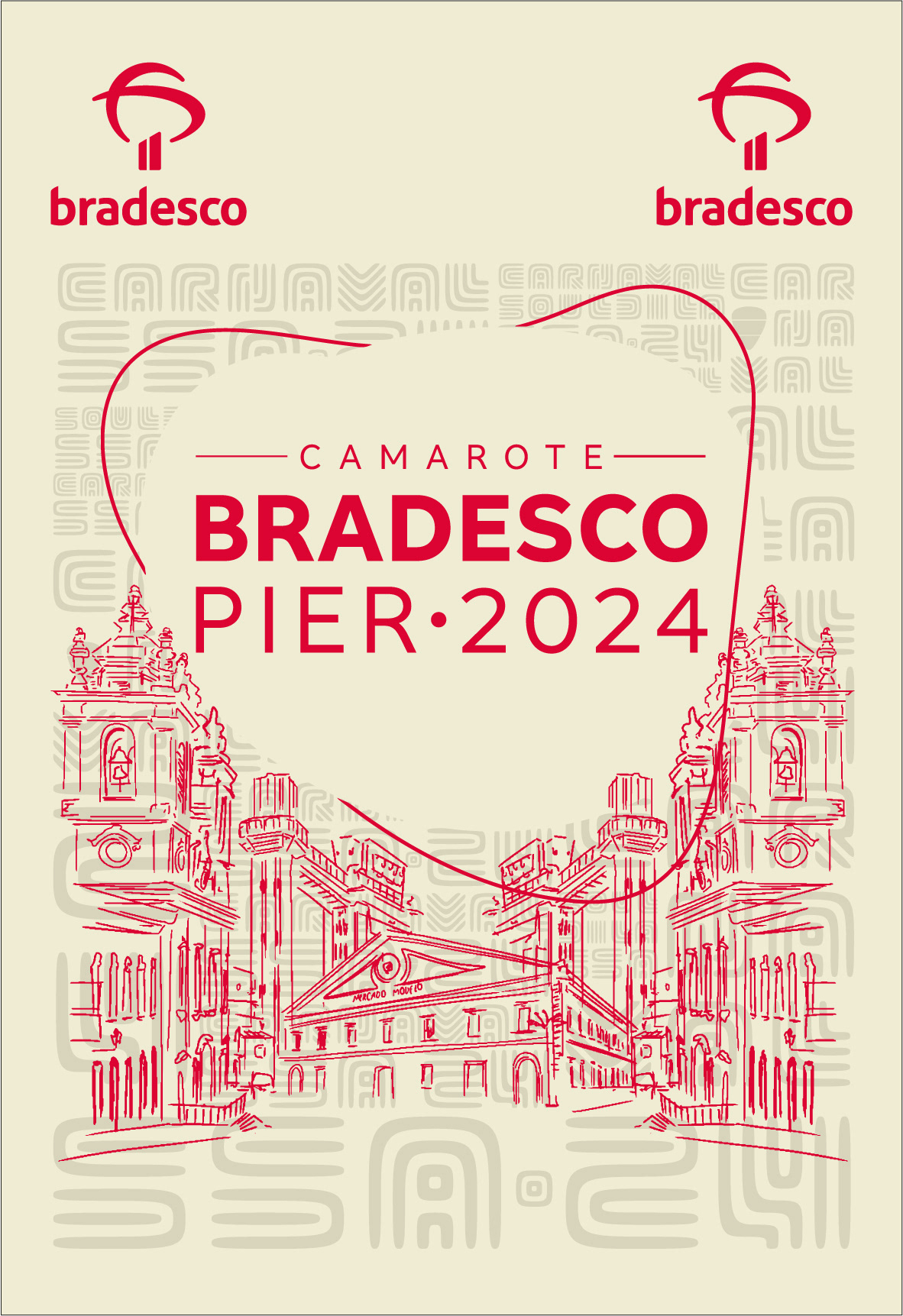
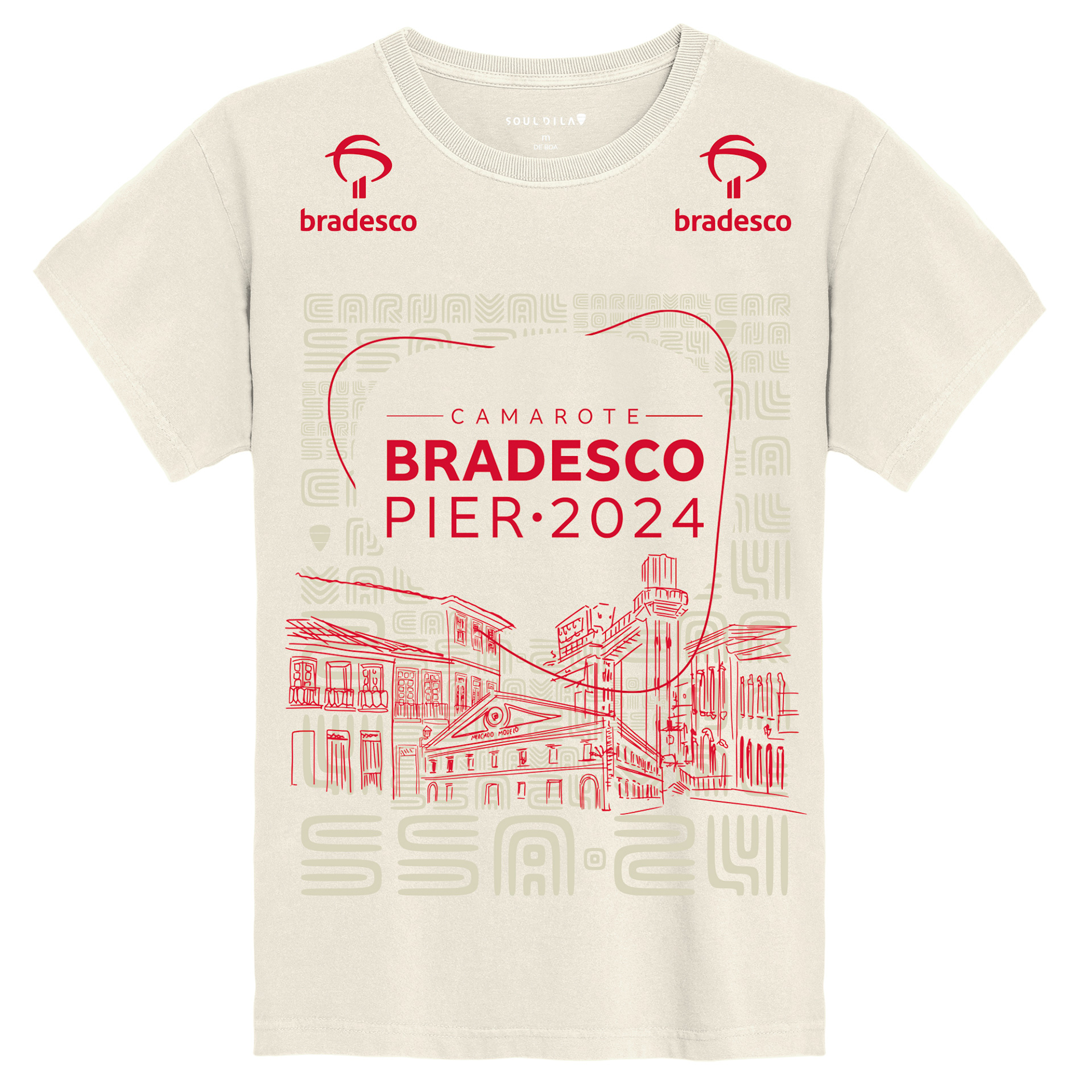
A cidade de Salvador, se concentrava no Pelourinho e região, então era ali também que acontecia a grande festa. Nessa estampa, trago elementos dos casarios característicos, o elevador Lacerda e o Mercado Modelo que marcam a paisagem da região.
CARNIVAL IN PELOURINHO
The city of Salvador was centered around Pelourinho and the surrounding area, so that's where the big party took place. In this design, I've included elements of the characteristic houses, the Lacerda Elevator, and the Mercado Modelo that mark the landscape of the region.
A ELETRIFICAÇÃO
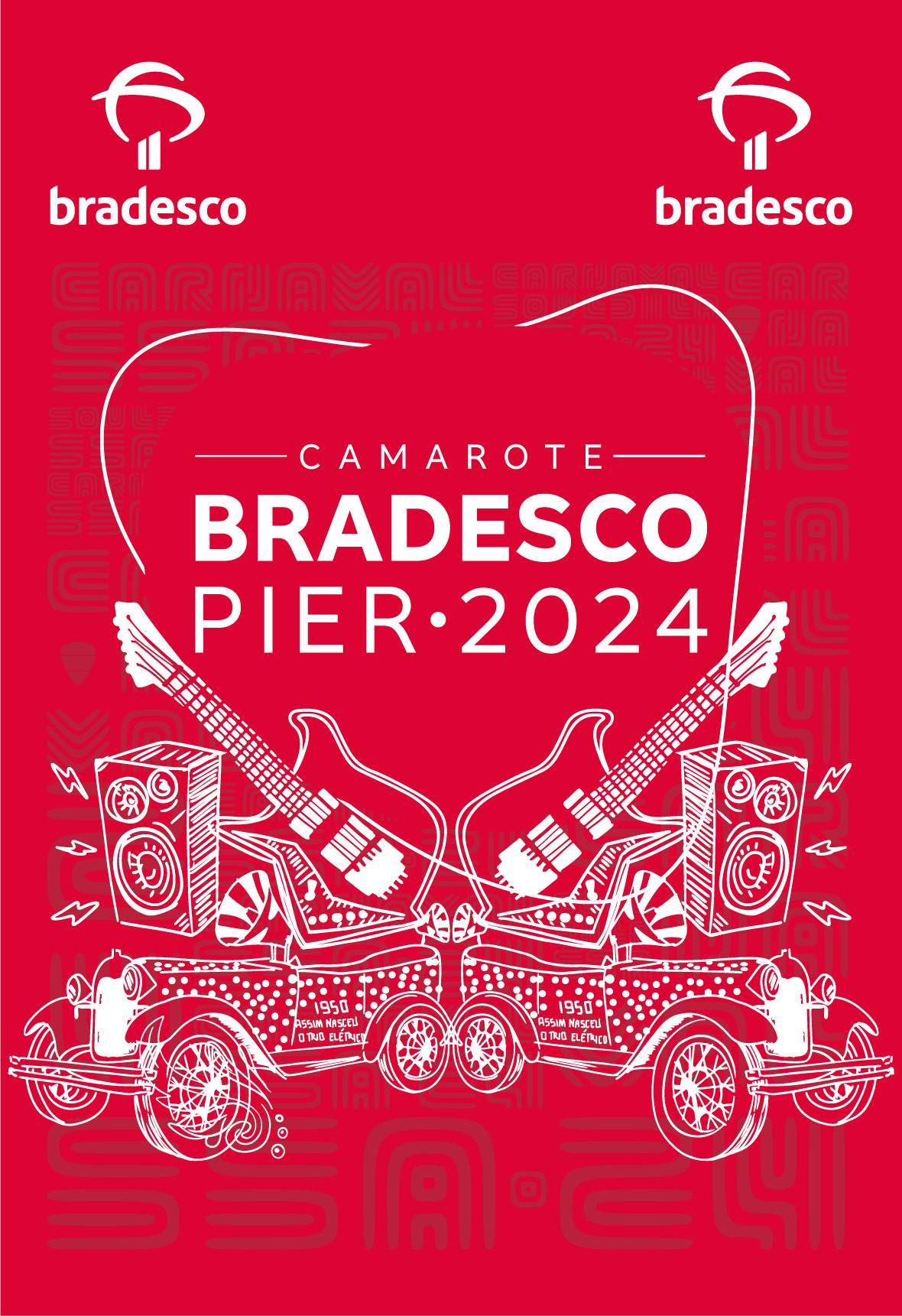
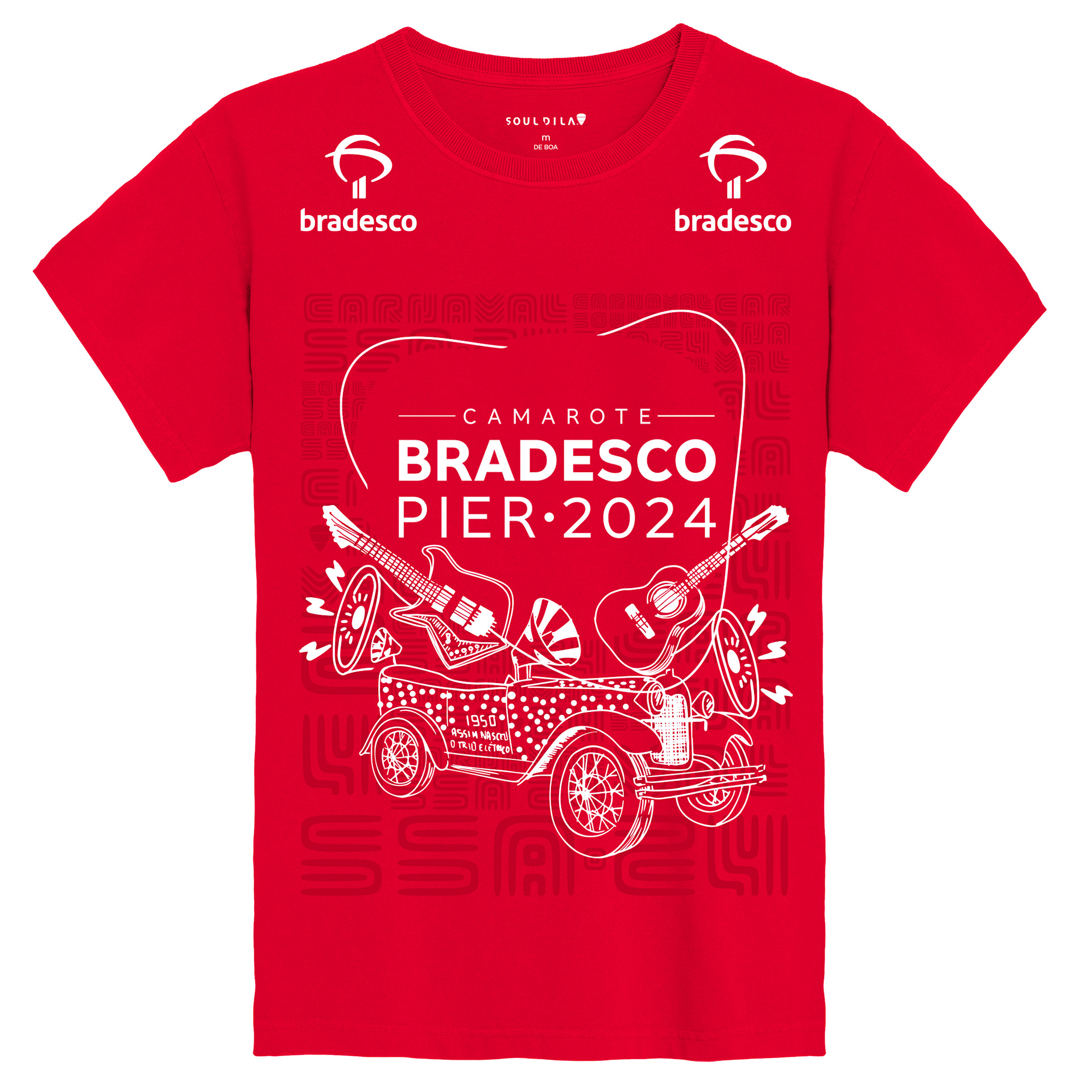
Em 1950, os músicos Dodô e Osmar, decidem adaptar um Ford 1929 com amplificadores e alto-falantes e desfiam tocando frevo nas ruas e revolucionando o Carnaval baiano ao levar música ao vivo para o público.
Nasce então, O PRIMEIRO TRIO ELÉTRICO. Na estampa, além do Ford 1929, mais conhecido como "FOBICA", trago outros elementos que foram sendo adicionados na música baiana, como o cavaquinho e a famosa "guitarra baiana", criada também pelos músicos, originalmente chamada de "pau elétrico".
ELECTRIFICATION
In 1950, musicians Dodô and Osmar decided to adapt a 1929 Ford with amplifiers and loudspeakers and started playing frevo in the streets, revolutionizing the Bahian Carnival by bringing live music to the public.
Thus, THE FIRST ELECTRIC TRIO was born. In the image, in addition to the 1929 Ford, better known as "FOBICA", I bring other elements that were added to Bahian music, such as the cavaquinho and the famous "Bahian guitar", also created by the musicians, originally called "electric stick".
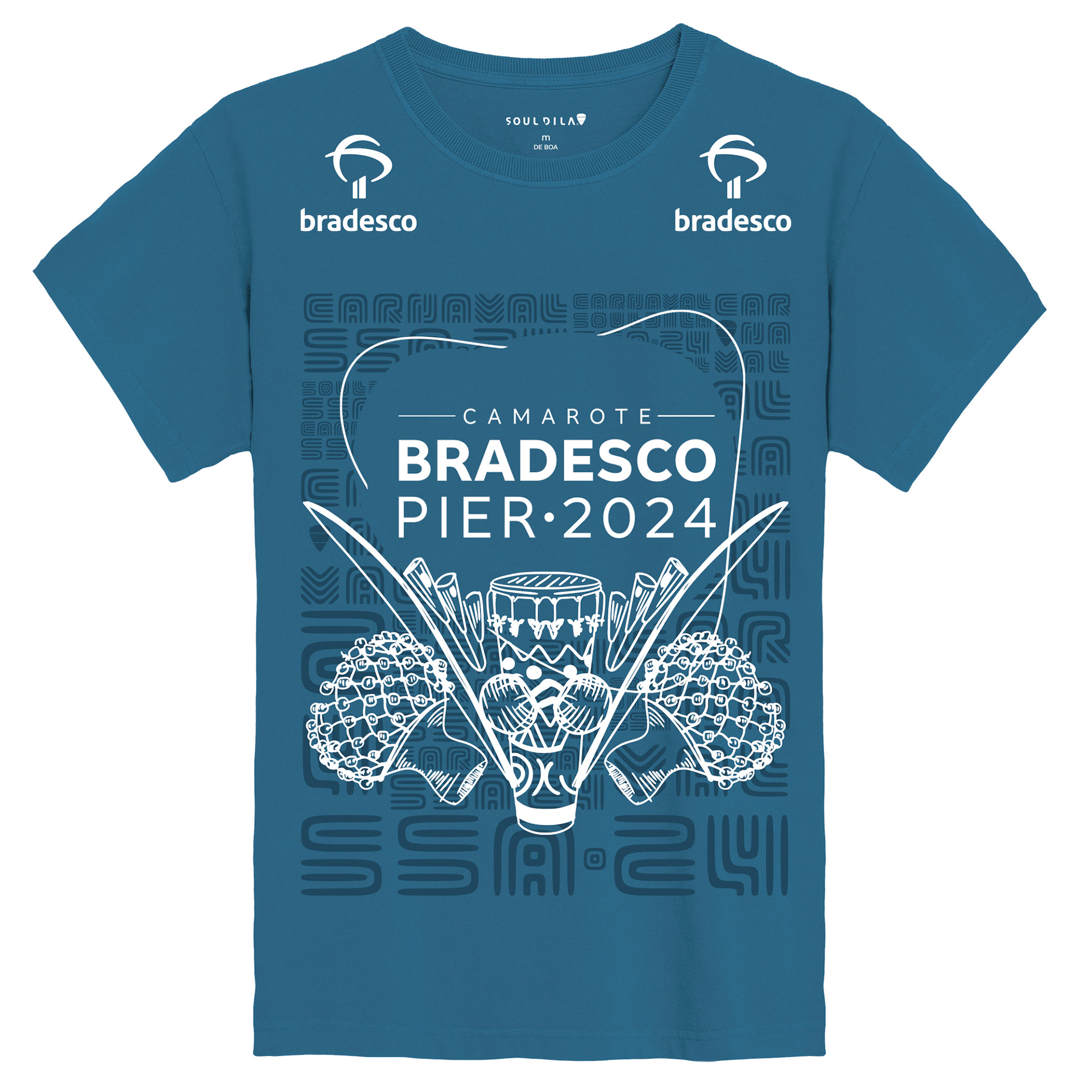
A ASCENSÃO DOS BLOCOS AFRO
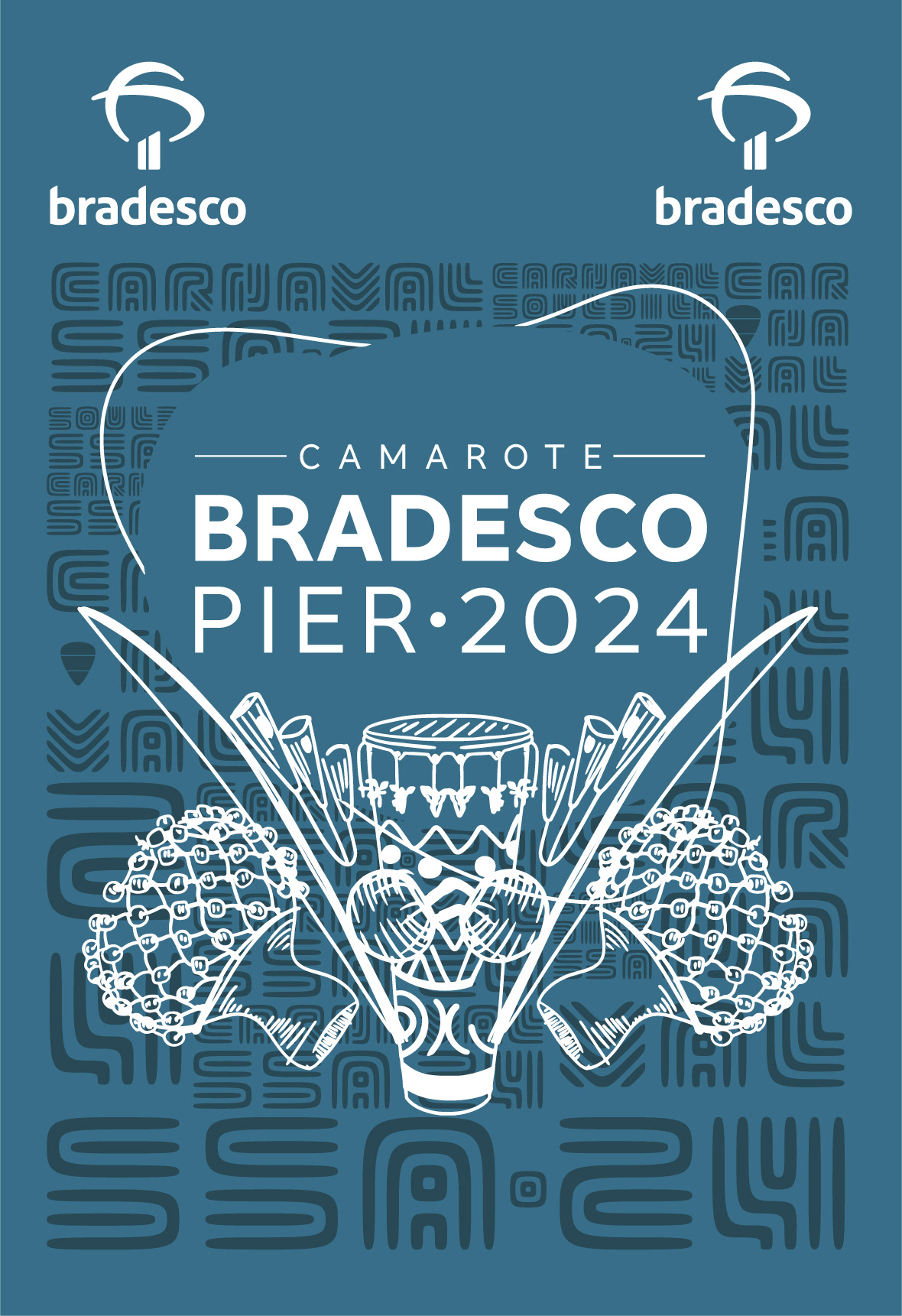
Iniciada com força na década de 1970, representando um marco de resistência, afirmação cultural e política da população negra baiana. Os blocos afro, surgem como resposta à exclusão racial nas festas tradicionais e transformaram a estética e a música do Carnaval, tornando-se símbolos de orgulho negro e valorização das raízes africanas.
Na estampa, eu trouxe instrumentos musicais presentes nesse movimento, como o agogô, o xequerê, o timbau e o famoso berimbau.
THE RISE OF AFRO BLOCKS
Starting forcefully in the 1970s, representing a landmark of resistance, cultural and political affirmation of the black population of Bahia. The Afro blocks emerged as a response to racial exclusion in traditional festivals and transformed the aesthetics and music of Carnival, becoming symbols of black pride and appreciation of African roots.
In the design, I included musical instruments present in this movement, such as the agogô, the xequerê, the timbau, and the famous berimbau.
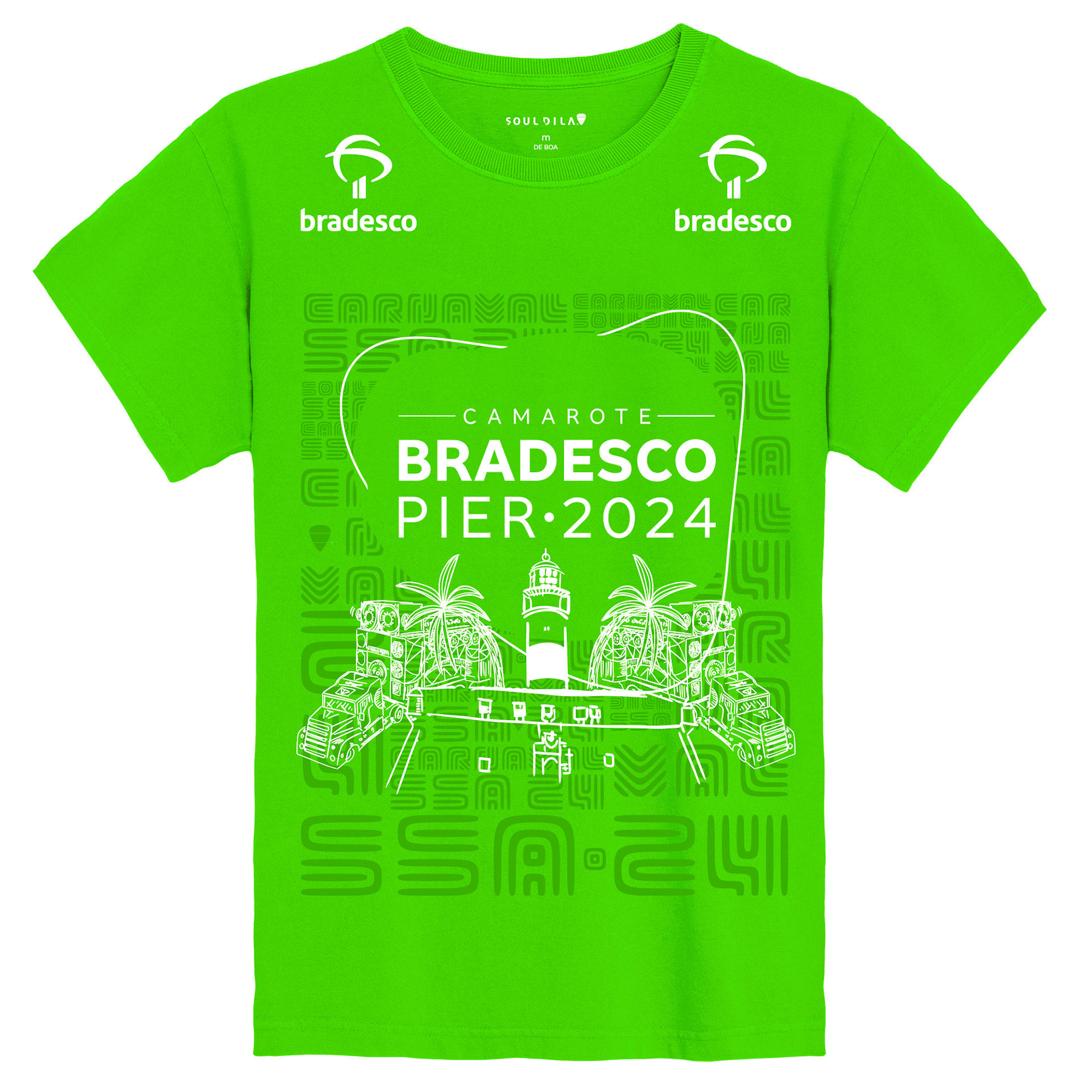
BARRA / ONDINA
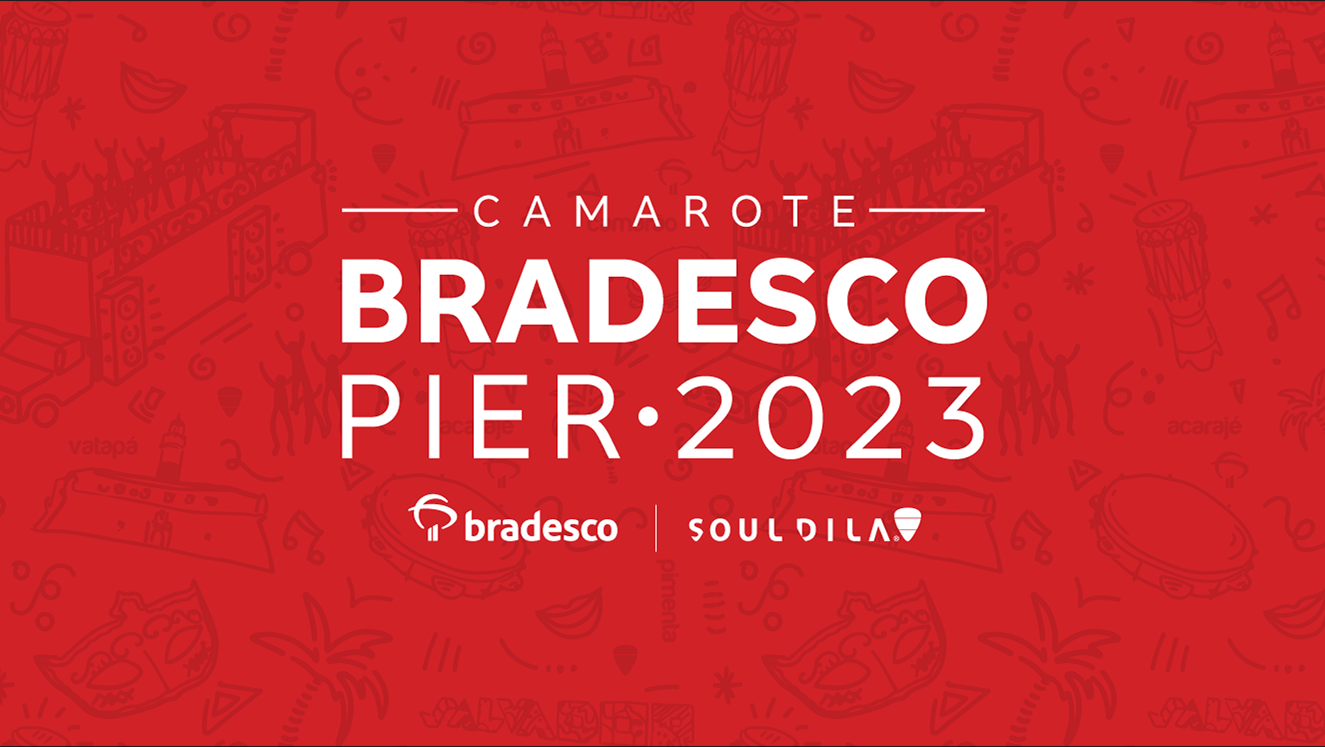
Muitos não sabem, mas o circuito Barra/Ondina nem sempre existiu. Em 1996 a cantora Daniela Mercury resolve levar de maneira inédita o bloco Crocodilo pra orla e assim nasce o que viria a se tornar o maior circuito do Carnaval de Salvador.
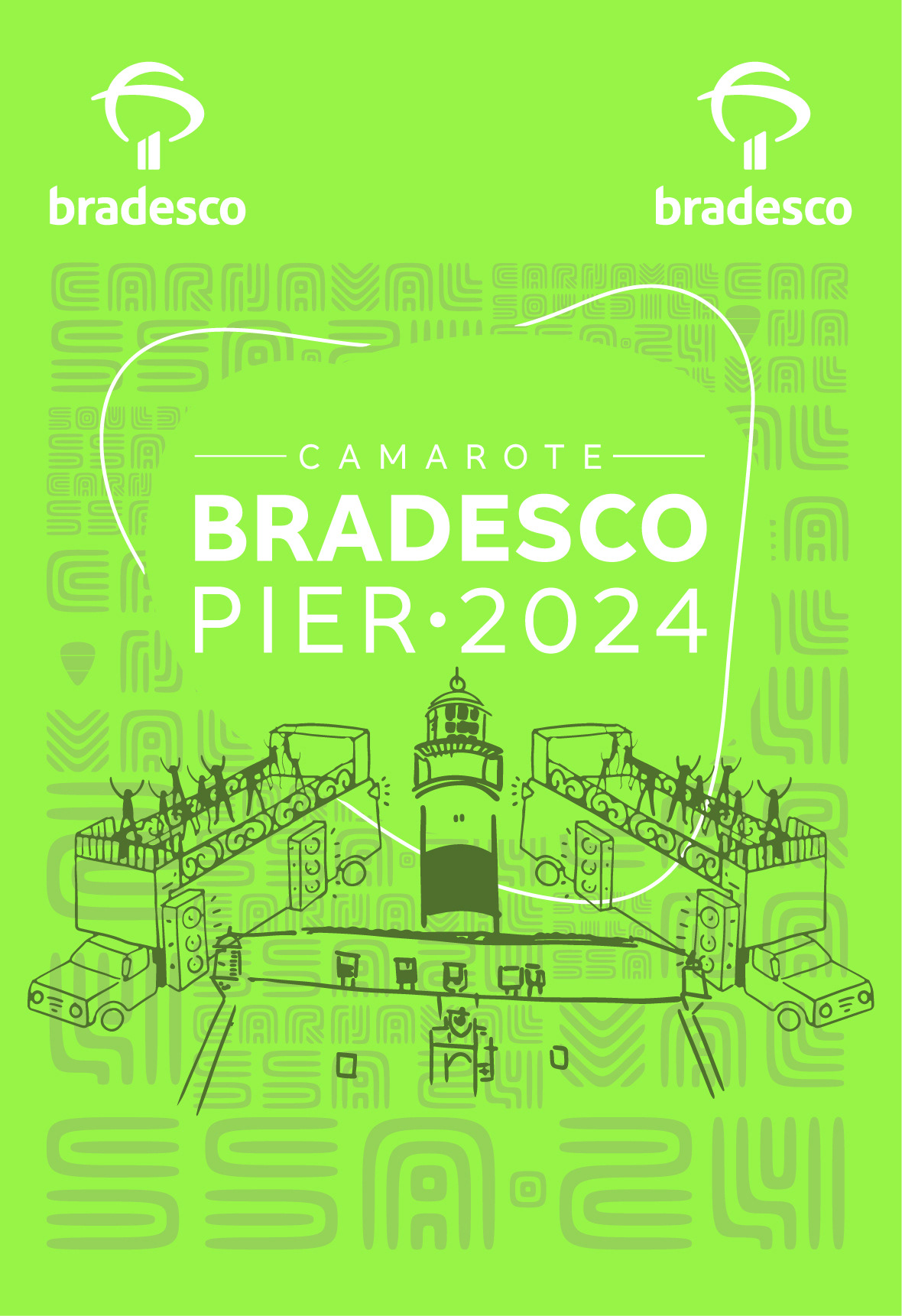
Pra representar esse marco na história de Salvador, trazemos o trio elétrico como conhecemos hoje e o famoso Forte de Santo Antônio da Barra, mais conhecido como FAROL DA BARRA.
BARRA / ONDINA
Many don't know, but the Barra/Ondina circuit didn't always exist. In 1996, singer Daniela Mercury decided to take the Crocodilo bloco to the waterfront for the first time, and thus was born what would become the largest circuit of Salvador's Carnival.
To represent this milestone in Salvador's history, we bring the trio elétrico as we know it today and the famous Forte de Santo Antônio da Barra, better known as FAROL DA BARRA.